A browser-based alternative to Beekeeper Studio
Planche and Beekeeper Studio both focus on making database work approachable without giving up a real SQL editor and editable data browser. The main architectural difference is the interface: Planche runs in a browser with a local database agent, while Beekeeper Studio is an installed desktop application. Beekeeper Studio Community Edition is free and open source.
Open Planche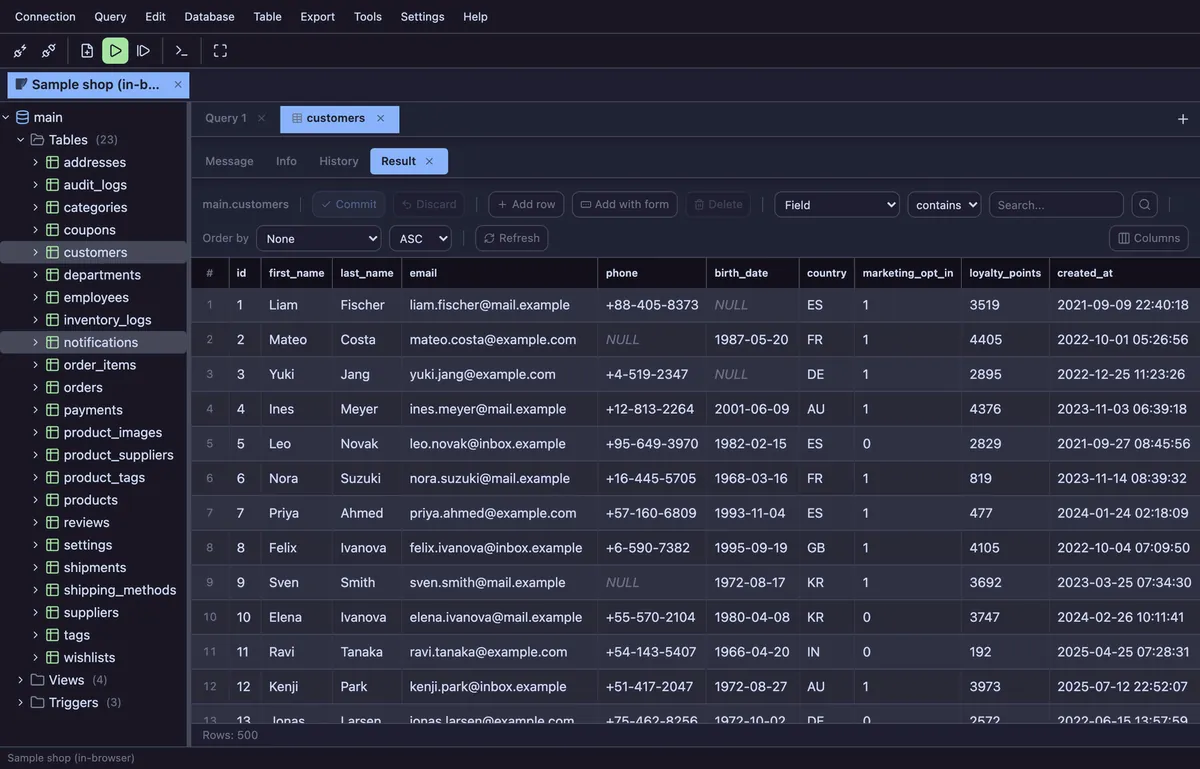
| Consideration | Planche | Beekeeper Studio |
|---|---|---|
| Interface | Browser-based UI with local agent connections | Desktop application |
| Free database support | MySQL, MariaDB, PostgreSQL, SQLite, SQL Server and Oracle, plus selected hosted services | Community lists MySQL, PostgreSQL, SQLite, SQL Server, CockroachDB, BigQuery, MariaDB and Redshift |
| Connections and tabs | Unlimited in Free | Unlimited in Community |
| SQL and data editing | SQL editor, schema browser and editable result grid in Free | Query editor, table exploration and editing in Community |
| ER diagrams | Included in Free | Listed among paid features on the Community edition page |
| Open source | No; proprietary, free to use for personal and commercial work | Community features are GPLv3 open source |
| Advanced features | SSH, comparisons, dry run, federation and scratchpad require Pro | AI, ERD, collaboration, import/export and other capabilities vary by paid plan |
When Planche is the better fit
Choose Planche when you prefer a browser interface, need Oracle in the same client, want an ERD in the free tier, or value its local-agent architecture and production guard rails. The free client also includes read-only profiles, environment colours and destructive-statement confirmation.
If you are comparing modern database tools more broadly, see the TablePlus comparison and the explanation of Planche as an online SQL client with local access.
When Beekeeper Studio may be the better fit
Choose Beekeeper Studio when you want an installed desktop app, prefer its interface, need a Community database Planche does not support, or require an open-source Community client. Its free edition is substantial, so the decision is primarily workflow and database coverage rather than “free versus paid.”
Questions
Is Planche a free Beekeeper Studio alternative?
Yes. Planche’s core client has no account, time, connection or query-tab limit. Beekeeper Studio Community is also free, open source and offers unlimited connections and tabs.
What is the main difference between Planche and Beekeeper Studio?
Planche uses a browser interface and a local agent for network database connections. Beekeeper Studio is an installed desktop application. Both provide a SQL editor and editable data browsing.
Does Planche include an ERD for free?
Yes. Planche generates an ERD from foreign keys and saves layouts locally. Beekeeper Studio currently lists ERD among its paid features.
Is Planche open source?
No. Planche is proprietary software that is free to use for personal and commercial work, with selected advanced features in Pro. Beekeeper Studio Community Edition is GPLv3 open source.
Which databases does Planche support?
Planche supports MySQL, MariaDB, PostgreSQL, SQLite, SQL Server and Oracle, plus Neon, Supabase, Cloudflare D1 and local Cloudflare Durable Objects development.
Free to use
Planche has a free tier that needs no account and uploads none of your data — connection profiles live only in your browser. A few advanced features need Pro; see pricing.